
Investing in a fiber laser machine is a strategic decision that can significantly impact manufacturing productivity, operational efficiency, and long-term business growth. With the increasing adoption of laser technology across industries, selecting the right fiber laser solution has become more important than ever. Manufacturers must carefully evaluate their production requirements, materials, and future growth objectives to ensure they choose a system that delivers maximum value.
The first factor to consider is the type of application. Different manufacturing operations require different laser technologies. For businesses focused on sheet metal processing, a fiber laser cutting machine offers exceptional speed, precision, and versatility. Companies involved in fabrication, component manufacturing, or industrial production may benefit from advanced cutting systems capable of handling a wide range of material thicknesses and production volumes.
Material type and thickness also play a critical role in machine selection. Fiber laser systems are capable of processing various metals, including mild steel, stainless steel, aluminum, brass, and copper. However, the required laser power depends largely on the thickness and complexity of the materials being processed. Higher-power systems are generally better suited for heavy industrial applications, while lower-power machines can efficiently handle lighter manufacturing requirements.
Production volume is another important consideration. Manufacturers with high-volume production demands should prioritize machines that offer faster cutting speeds, automated loading systems, and advanced material handling capabilities. These features help maximize productivity while reducing operational downtime. For businesses with diverse production requirements, flexible laser systems that support multiple applications can provide greater long-term value.
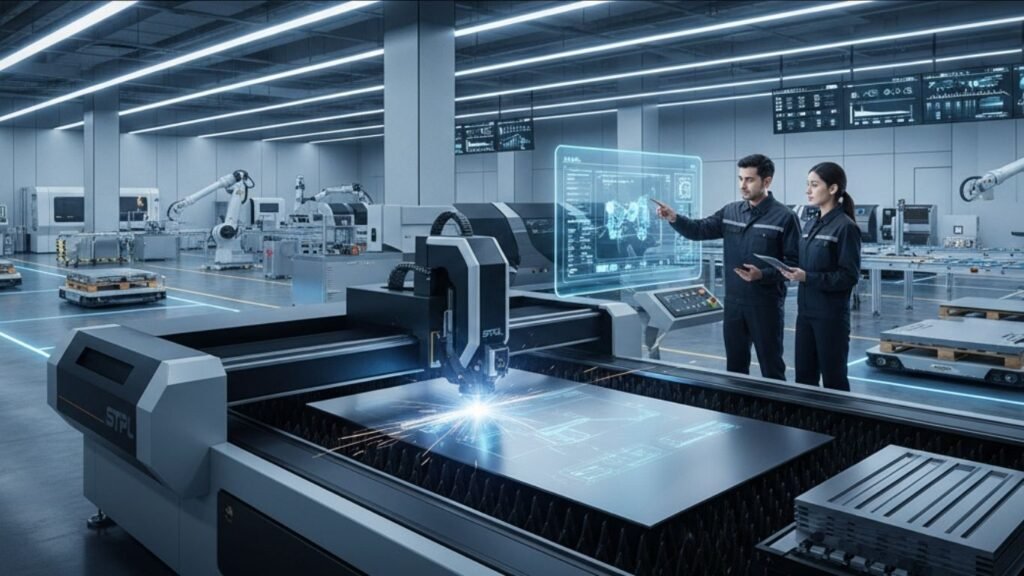
Automation capabilities are becoming increasingly important in modern manufacturing environments. Many advanced fiber laser systems can be integrated with automated loading, unloading, tube processing, and production monitoring solutions. Automation not only improves operational efficiency but also reduces manual handling, minimizes errors, and enhances workplace safety. Businesses planning for future expansion should consider automation-ready solutions that can scale alongside their production needs.
Machine reliability and maintenance requirements should also be carefully evaluated. A high-quality fiber laser system is designed to provide consistent performance with minimal maintenance interruptions. Reliable machines help reduce downtime, lower service costs, and ensure uninterrupted production schedules. Partnering with an experienced technology provider that offers strong after-sales support is equally important for maintaining long-term operational success.
Precision and cutting quality remain among the most critical factors when selecting a fiber laser machine. Modern fiber laser systems are engineered to deliver clean cuts, tight tolerances, and exceptional edge quality. These capabilities help manufacturers reduce secondary finishing operations, improve product quality, and increase overall production efficiency.
Technical support and training services should not be overlooked. A successful laser machine investment extends beyond equipment installation. Comprehensive operator training, technical assistance, maintenance support, and application guidance help ensure businesses achieve maximum productivity from their investment. Choosing a manufacturer with proven industry expertise can make a substantial difference in long-term performance and return on investment.
Future growth potential is another key consideration. Manufacturing requirements evolve over time, and businesses should invest in solutions that can adapt to changing production demands. Scalable laser systems with upgrade options and automation compatibility provide greater flexibility and help protect long-term investments.
At STPL, we understand that every manufacturing operation has unique requirements. Our portfolio of advanced fiber laser cutting, welding, marking, and cleaning solutions is designed to support industries ranging from automotive and aerospace to metal fabrication and industrial engineering. With over 30 years of expertise in laser technology and automation, we help businesses identify the right solutions to improve productivity, precision, and operational performance.
Choosing the right fiber laser machine is more than a purchasing decision—it is an investment in future manufacturing success. By evaluating application requirements, production goals, automation opportunities, and long-term growth strategies, manufacturers can confidently select a solution that delivers lasting value and competitive advantage.